



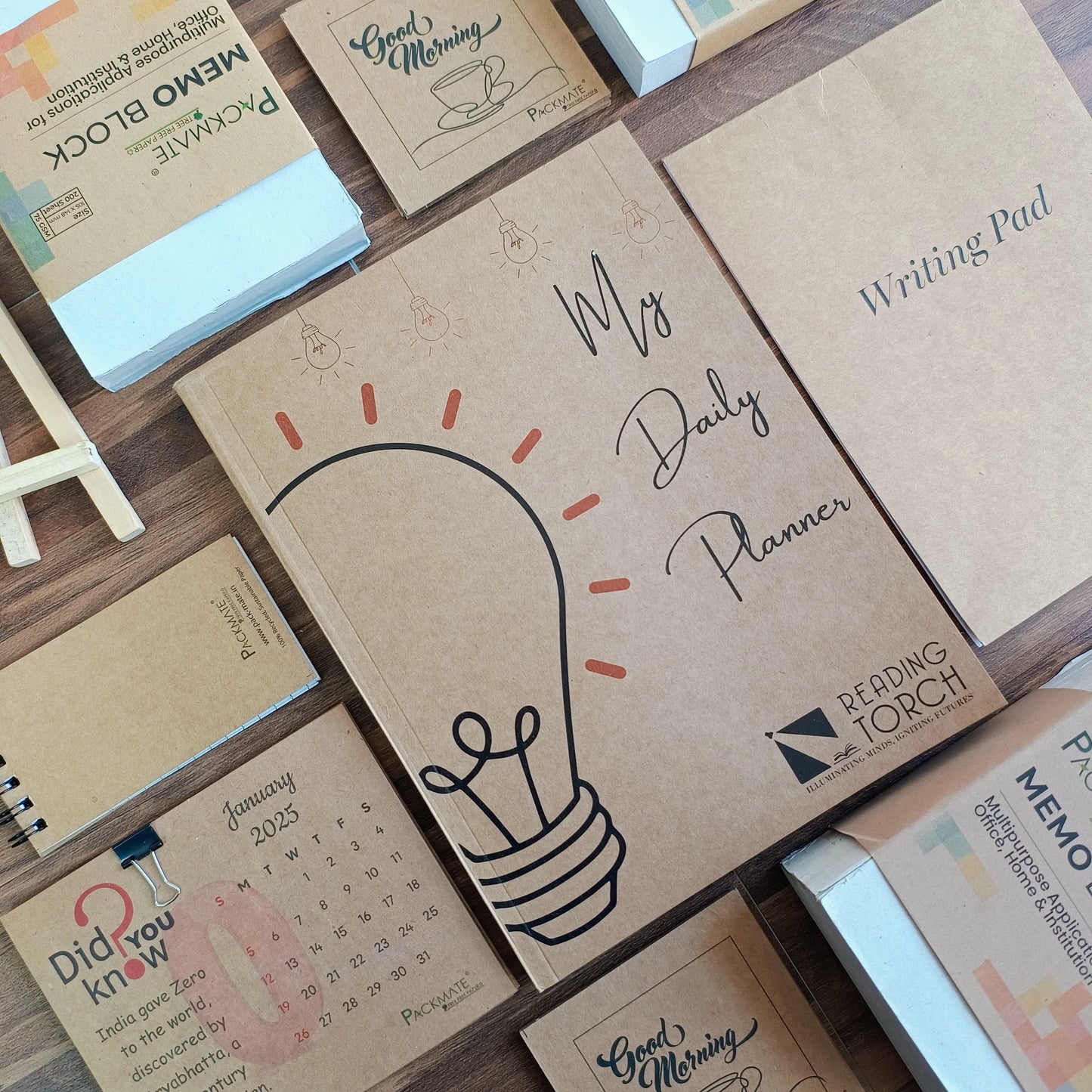


Find out how educational institutions can switch to sustainable stationery while staying within budget. Learn practical tips for choosing the right products and managing stationery costs.
The biggest myth about sustainable stationery is the assumption that environmentally responsible products always come with a higher price tag. Because of this perception, many schools, colleges, and universities hesitate to adopt greener procurement practices, especially when operating under tight budgets. However, the reality is that institutions do not have to spend more to choose sustainability.
With growing environmental awareness, educational sectors are actively seeking ways to reduce their environmental footprint. Procurement decisions, particularly regarding daily-use stationery, play a vital role in achieving these sustainability goals. This guide explores practical purchasing strategies, cost-saving opportunities, and product selection tips to help institutions balance affordability with environmental responsibility.
Why Educational Institutions Are Moving Toward
As educational institutions serve as role models for students and communities, they carry a unique responsibility to promote environmental awareness and responsible resource management. Since items like copier paper, notebooks, and folders are consumed in massive quantities, shifting to eco-friendly alternatives significantly reduces waste and resource consumption. Beyond the ecological benefits, sustainable procurement enhances an institution's reputation and aligns with modern student and parent expectations.
Environmental Impact of Traditional Stationery Products
Traditional stationery is primarily manufactured using virgin paper, which requires significant amounts of wood pulp, contributing to deforestation and habitat loss. The production process is resource-intensive, consuming large volumes of water and energy while generating greenhouse gas emissions and industrial waste. Transitioning to products made from recycled and responsibly sourced materials helps alleviate pressure on natural resources.
Also Read: The Ultimate Guide to Eco-Friendly Stationery: A Sustainable Choice for All
Benefits of Sustainable Stationery for Schools and Colleges
- Reduced Environmental Impact: Lowering the carbon footprint and preserving biodiversity.
- Lower Resource Consumption: Decreasing the demand for fresh wood pulp and energy.
- Support for Green Initiatives: Directly contributing to campus-wide sustainability targets.
- Enhanced Reputation: Improving alignment with environmental policies and community values.
Understanding the Real Cost
When procuring supplies, institutions should look beyond the initial purchase price to understand the "total cost of ownership". True value is determined by a product's lifespan, usage efficiency, and replacement frequency. Often, higher-quality eco-friendly products deliver better long-term value despite a slightly higher upfront cost.
Common Myths About Sustainable Stationery Costs
The most prevalent myth is that eco-friendly supplies are prohibitively expensive. In recent years, the price gap between traditional and sustainable options has narrowed significantly due to increased demand and larger production volumes. Strategic bulk procurement and strong supplier partnerships can often bring sustainable costs in line with conventional budgets.
Looking Beyond Upfront Pricing
Cost efficiency is often found in durability and reduced waste. For example, higher-quality paper may lead to fewer printer jams and more efficient ink usage, while durable notebooks reduce the need for frequent mid-term replacements.
Key Factors to Consider When Choosing
Recycled Content and Material Sources
Institutions should prioritize products with high recycled content. Understanding the difference between post-consumer waste (recycled from used products) and pre-consumer waste (industrial scraps) helps in making informed decisions that meet specific sustainability goals.
Product Quality and Performance
Sustainability should never compromise functionality. Key performance indicators for educational use include:
- Paper Smoothness: Critical for handwriting and print quality.
- Ink Performance: Ensuring ink does not bleed through recycled pages.
- Durability: Notebook bindings must withstand the daily wear and tear of being carried in student bags.
Certifications and Environmental Standards
Certifications are essential to verify environmental claims and avoid "greenwashing". Procurement teams should look for recognized standards that indicate responsible forest management, recycled material content, and sustainable manufacturing processes.
Supplier Reliability and Consistency
Evaluate suppliers based on their inventory availability, delivery timelines, and product consistency. Long-term partnerships with reliable vendors ensure a steady supply of sustainable goods without administrative delays.
Also Read: Sustainable Writing: The Rise of Eco-Friendly Stationery and Why It Matters
Practical Strategies to Reduce Stationery Costs While Going Sustainable
Purchase in Bulk for Better Pricing
Volume purchasing is one of the most effective ways to lower per-unit costs for sustainable stationery. By forecasting annual requirements and placing larger orders, institutions can negotiate better rates and reduce shipping frequencies.
Standardise Stationery Across Departments
Reducing product variations simplifies inventory management and maximizes purchasing power. Standardizing items like notebook sizes and paper types across different departments or grade levels allows for more effective bulk buying.
Reduce Waste Through Better Usage Policies
Implementing waste reduction policies directly lowers procurement needs:
- Enforce double-sided printing as a default.
- Utilize digital document sharing for assignments.
- Establish controlled distribution and monitoring systems for supplies.
Choose Multipurpose Stationery Products
Opting for versatile supplies, such as multi-functional writing pads or modular filing systems, reduces the total number of unique items an institution needs to stock.
Also Read: Eco-Friendly Products in India for a Sustainable Lifestyle
Sustainable Stationery Products Educational Institutions Should Prioritise
- Recycled Copier and Printer Paper: Often the largest stationery expense, making it the highest-impact area for sustainability.
- Eco-Friendly Notebooks: Focus on tree-free or 100% recycled paper options designed for durability.
- Administrative Supplies: Folders, files, and envelopes made from unbleached or recycled materials.
How to Evaluate a Sustainable Stationery Supplier
Use the following checklist to assess potential partners:
- Does the supplier offer high recycled material content?
- Are products backed by recognized environmental certifications?
- Are manufacturing practices transparent and eco-conscious?
- Does the supplier have the capacity to meet high-volume academic demands?
- Is sustainability reporting provided for institutional compliance?
Conclusion
Educational institutions no longer have to choose between sustainability and affordability. Through careful planning, strategic supplier selection, and smart usage policies, schools can significantly reduce their environmental impact without increasing procurement budgets. Evaluating suppliers who offer transparency and cost-effective bulk solutions is the first step toward a more sustainable and fiscally responsible future.
Frequently Asked Questions (FAQs)
Q1: Is sustainable stationery more expensive than traditional stationery?
Ans: Not necessarily. The price difference has narrowed due to increased production volumes and demand. When considering total cost of ownership and bulk discounts, sustainable options are often highly competitive.
Q2: What sustainable stationery products should schools prioritise first?
Ans: High-volume items should be the priority, including recycled copier paper, notebooks, writing pads, folders, and general administrative supplies.
Q3: How can educational institutions reduce stationery procurement costs?
Ans: Costs can be reduced by purchasing in bulk, standardizing products across departments, and implementing waste reduction policies like digital sharing and print management.
Q4: What certifications should educational institutions look for when purchasing sustainable stationery?
Ans: Look for certifications that verify responsible sourcing, recycled content percentages, and sustainable manufacturing compliance.