





A school’s paper consumption is not limited to classrooms. Printing, examinations, administration, events, and everyday stationery all contribute to the amount of paper used throughout the year. Recycled paper gives schools a practical way to make everyday paper use more responsible.
And, when we use recovered fibres rather than relying totally on virgin materials, it can help reduce paper waste and conserve valuable natural resources. When used across regular printing, stationery, as well as administrative work, recycled paper products for schools can make purchasing decisions meaningful in terms of sustainability contribution.
In this guide, we’ll look at the benefits of recycled paper products, the types of paper products that schools can adopt, and what exactly to consider when comparing recycled paper products and regular paper before switching.
How Much Paper Do Schools Use?
Consumption of paper in schools generally comes from far more than just worksheets. When these everyday uses are repeated across hundreds of students and entire academic year, then the volume can become significant:
- Classroom work: Worksheets, assignments, projects, along with study materials.
- Examinations: Question papers, answer sheets, assessment, and result documents.
- Administration: Forms, attendance records, notices, circulars, and internal documents as well.
- Stationery: Notebooks, folders, writing pads, certificates, and some other paper supplies.
- Events and activities: Posters, displays, art projects, invitations, and event materials.
-
The bigger opportunity: Schools can reduce unnecessary printing, reuse paper where practical, and choose recycled paper products for schools for their essential needs.
What Are Recycled Paper Products?
Recycled paper products are actually made by collecting used paper. Its reusable fibres are recovered and then processed into new paper or any other paper-based products.
Instead of sending these materials straight to waste, recycling gives them another productive use and can reduce dependency on virgin raw materials.
Depending on the product, recycled paper can be used for printing, writing, classroom activities, administration, stationery, and packing. This makes it a practical option for schools rather than a niche environment alternative.
Why Should Schools Switch to Recycled Paper Products?
Switching to recycled paper is a simple way for schools in order to make their everyday operations even more resource-conscious.
Since paper is used in classrooms, offices, examinations, and even small changes in procurement can add up over time.
1. Reduce Paper Waste
Recycled paper provides recycled fibres another useful life. Combined with practices like double-sided printing and paper recycling, it can help schools manage paper waste more effectively.
2. Reduce Dependence on Virgin Raw Materials
Choosing recycled paper products for schools reduces the need to rely solely on virgin fibres. Now, this makes everyday paper purchasing a more responsible use of existing resources.
3. Support Sustainable School Operations
Replacing conventional paper with sustainable paper products for schools can complement a school’s recycling, waste reduction, and environment initiatives without altering essential routines.
4. Create Environmental Awareness Among Students
Using recycled paper makes sustainability visible. Students can see how everyday materials are being reused, and this makes lessons about recycling and responsible consumption more practical and relatable.
5. Build a Greener School Culture
Sustainable choices become more meaningful when they are consistent. Using eco-friendly paper products for schools across classrooms, offices, and events can promote wider habits of responsible resource use.
Recycled Paper Products Schools Can Use
Schools can replace many everyday paper-based supplies with recycled alternatives without changing their regular routines. Here are some practical options schools can consider:
- Recycled Printing Paper: Useful for worksheets, assignments, notices, examinations, and office documents.
- Recycled Notebooks: Suitable for classwork, homework, student notes, and practice work.
- Recycled Writing Pads: A practical choice for staff meetings, planning, and administrative tasks.
- Recycled Envelopes: Can be used for school correspondence, letters, notices, and official communication.
- Recycled Folders: Useful for storing student records, assignments, reports, and office documents.
- Recycled Certificates: Suitable for awards, competitions, participation certificates, and school events.
- Recycled Paper Bags: Useful for school events, activities, and distributing materials.
- Recycled Art Paper: Suitable for drawing, crafts, projects, and other classroom activities.
- Recycled Stationery: Includes everyday paper-based supplies used by students, teachers, and administrative staff.
-
Recycled Paper Pens: A simple stationery option for students and staff looking to make everyday supplies more sustainable.
Recycled Paper vs. Regular Paper: What Should Schools Consider?
Both can work well in schools, but the difference lies in how they are made, how resources are used, and what each product is designed for. Here’s what schools should compare before choosing.
|
Factor |
Recycled Paper |
Regular Paper |
|
Fibre Source |
Uses recycled paper fibres |
Mostly uses virgin fibres |
|
Resource Use |
Reuses existing fibres |
Requires new fibres |
|
Environment |
Helps reduce paper waste |
Depends on how fibres are sourced |
|
Appearance |
May have a natural shade |
Usually bright white |
|
Performance |
Depends on paper quality and grade |
Widely available for printing |
|
Cost |
Varies by product and quantity |
Varies by product and quantity |
|
What to Check |
Recycled content, GSM, quality |
Quality, sourcing, and suitability |
Why Choose Packmate for Recycled Paper Products?
Schools need paper and stationery that work well for everyday teaching, administration, and student activities.
Packmate combines all of these practical aspects and has a special focus on sustainability, with its sustainable products, which are easier to choose.
Packmate’s strength is its products themselves, which are crafted with a mind to sustainability, and where the sustainable aspect is often a great asset and not simply a label.
Sustainability Built Into Everyday Products
Packmate provides recycled and environmentally friendly paper, notebooks, registers, stationery and desk accessories, making sustainable use of products easier to integrate into daily school activities.
Unique Eco-Friendly Product Concepts
Packmate's products take the approach of making sustainable products more relevant and addictive to even younger consumers.
Packmate Pens
Writing is one of the most common tasks people do every day, and it can certainly be done in a more responsible way by using Pens Made From Recycled Paper.
Seedable Pencils With a Second Life
There is a seed at the end of the pencils. When the pencil is completed, the other end can be put in soil and the seed sprouts and grows into a plant. This can also be an easy and practical way to educate children about reuse and take care of the environment within the school setting.
Paper & Notebooks
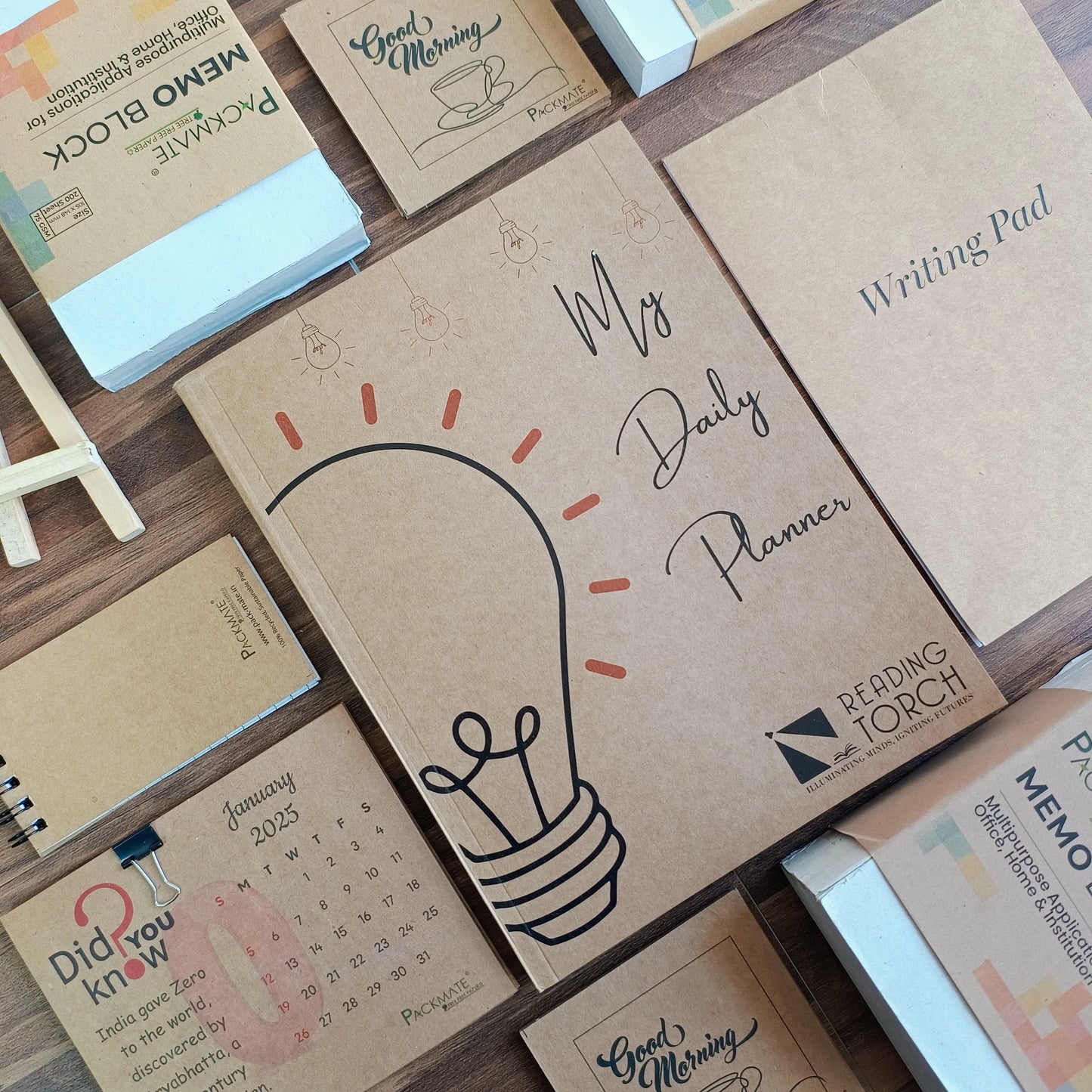
Packmate has A4, A5, A3, FS and Legal size copier paper, letterhead paper, 100 sheet packets, notebooks, notepads, A4 registers, planners, writing pads, pocket diaries, envelopes, paper pens and pencils.
The range includes student planners, notebooks, printing paper, as well as staff planners and administration stationery papers.
Conclusion
Sustainability in schools starts with the choices made every day. Using recycled paper products can contribute to a reduction in the use of virgin raw materials, increased re-use of recovered fibres and student awareness of waste and resource issues.
By offering sustainable solutions with practical paper products and innovative stationery, Packmate makes everyday school needs accessible and turns them into more sustainable options. Try out the variety of Packmate products and use each sheet properly.